
Heavy legs, ankles that swell by the evening and veins bulging under the skin are common reasons to see a doctor. They can be signs of varicose veins. For some people varicose veins are mainly a cosmetic concern; for others they cause pain, swelling and skin changes. A phlebologist — a vein specialist — helps find the cause of the symptoms, assess how the veins are working and choose the most suitable treatment.
What are varicose veins?
Varicose veins are enlarged, twisted superficial veins, most often in the legs. In the leg veins, blood has to flow upwards to the heart. This is supported by the calf muscles and by small valves inside the veins that stop blood from flowing backwards.
When the vein walls and valves stop working properly, some blood flows the wrong way — this is called reflux — and pressure in the veins rises. Over time the veins widen and become visible as bulging, twisted veins on the legs.
What causes varicose veins?
- family history — varicose veins often run in families;
- older age;
- pregnancy;
- being overweight;
- a job that involves standing for long periods.
Varicose veins are more common in women, but men can develop them too.
Varicose vein symptoms: how to recognise them?
Vein problems may cause:
- heavy, aching or uncomfortable legs;
- swollen ankles and lower legs, especially at the end of the day;
- cramps in the calves, often at night;
- itching or irritated skin over the veins;
- enlarged, bulging veins;
- brownish skin discolouration or eczema around the ankles;
- slow-healing wounds on the lower leg.
Symptoms tend to get worse after standing for a long time and ease when the legs are raised. However, leg pain and leg swelling can also have other causes, so a diagnosis cannot be made from symptoms alone.
Thin thread veins, also called spider veins, do not on their own mean significant venous insufficiency. If they come with swelling, pain or skin changes, a doctor should assess them.
What does a phlebologist do?
A phlebologist is a doctor who specialises in diagnosing and treating vein disease. During the consultation the doctor asks when the symptoms started, what makes them worse and how they affect daily life. Any history of blood clots, previous vein procedures, other conditions and current medication is also important.
The doctor examines the legs, assessing swelling, skin condition and visible veins. The aim is to work out whether the symptoms are caused by the veins and whether treatment, further tests or another specialist’s opinion is needed.
Venous Doppler ultrasound: why it matters
The key test is a venous duplex ultrasound, often simply called a venous Doppler scan. It shows the veins and measures the direction of blood flow, how the valves are working and whether the veins are open. The scan is painless, needs no special preparation and uses no radiation.
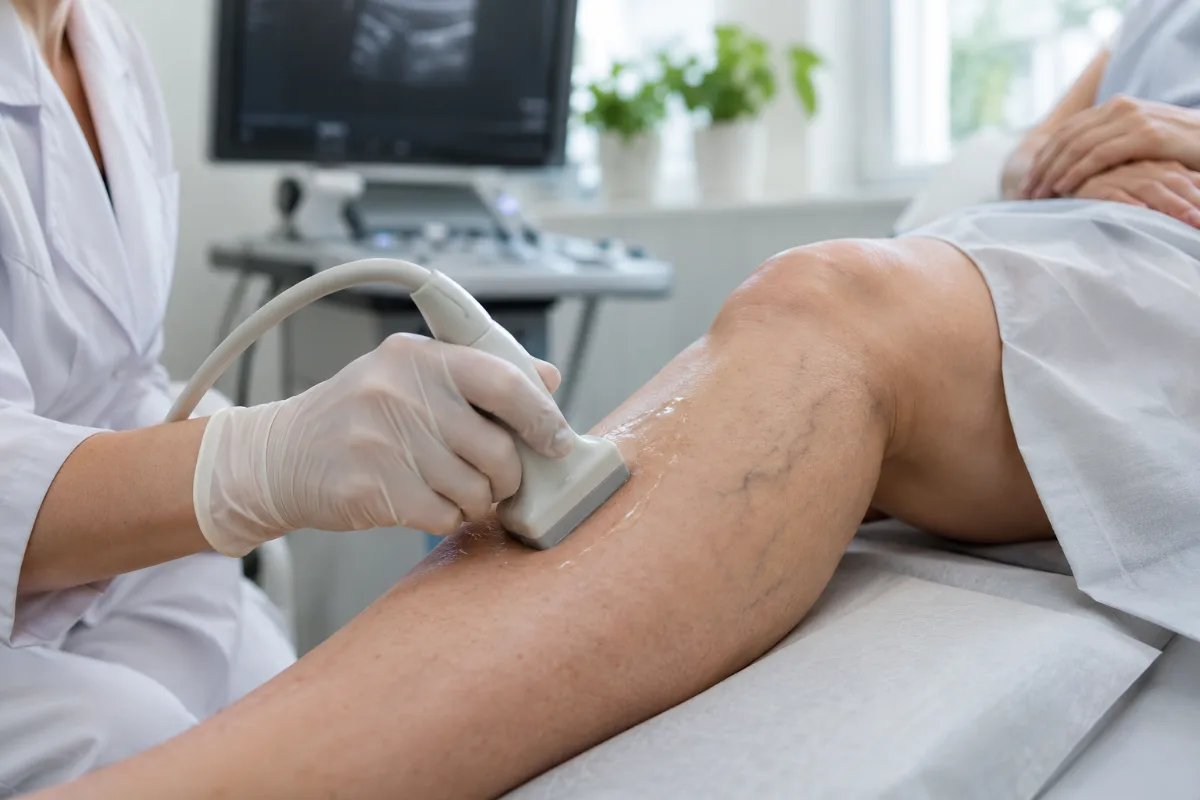
The ultrasound shows where blood is flowing backwards and which veins need treatment. This is especially important before any procedure and when varicose veins come back after previous treatment. A treatment plan should never be based on how the legs look alone.
How are varicose veins treated?
The choice of treatment depends on the symptoms, the scan results, general health and the patient’s preferences.
Exercise and compression stockings
Regular walking, calf exercises and movement breaks during long periods of sitting or standing help blood flow in the leg veins. Raising the legs while resting can also help. If you are overweight, losing weight may ease symptoms.
Medical compression stockings can reduce swelling and heaviness, but they do not repair damaged valves or cure varicose veins. The compression class and size are chosen individually. Compression may not be suitable if there are significant problems with the leg arteries, so it is best to check with a doctor first. Stockings are used to relieve symptoms, for example when a procedure is not suitable or the patient prefers not to have one.
Endovenous laser and radiofrequency ablation
If the ultrasound shows treatable reflux and the varicose veins are causing symptoms, the doctor may recommend a procedure. International guidelines often name endovenous thermal ablation as the first-choice treatment: the faulty vein is sealed from the inside using laser or radiofrequency energy. The procedure is usually done as an outpatient, under local anaesthetic and with ultrasound guidance.
Sclerotherapy, vein glue and phlebectomy
In sclerotherapy, a liquid or foam is injected into the vein, causing it to close. Another option is sealing the vein with a special medical adhesive. Individual varicose branches can be removed through tiny skin punctures (ambulatory phlebectomy). In some cases, traditional surgery is the better choice.
Before and after treatment
When a faulty superficial vein is closed, blood continues to drain through other healthy veins. That is why the deep vein system must also be checked before treatment. The doctor will explain the expected benefits, possible complications and recovery. Even after successful treatment, new varicose veins can appear in the future, so it is worth having your veins checked again if symptoms return.
When to seek urgent help
Sudden swelling of one leg, with pain, redness or warmth, needs urgent medical assessment to rule out deep vein thrombosis (DVT). A hard, painful, red vein — an inflamed vein — should also be seen by a doctor.
If you also have sudden shortness of breath, chest pain or fainting, call 113 or 112.
If a varicose vein bleeds, lie down, raise the leg and press firmly on the bleeding point with a clean dressing. If the bleeding is heavy, does not stop or you feel faint, get emergency help. Even if the bleeding stops, see a doctor urgently.
When to book a phlebologist consultation
A phlebologist consultation is recommended if enlarged veins come with pain, heaviness, recurring swelling or skin changes. You should also see a doctor if a wound on the lower leg has not healed within two weeks, or if vein problems have come back after treatment.
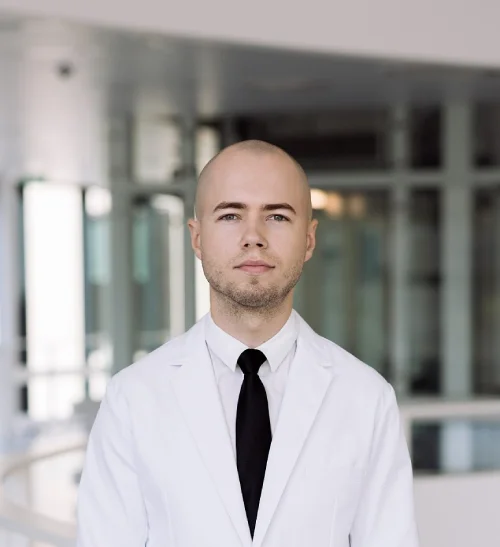
Dr. med. Roberts Rumba
Vascular surgeon, phlebologist
Varicose veins? Get your leg veins checked
If your legs feel heavy, swell, ache or you can see enlarged veins, a phlebologist consultation in Riga is recommended.
At Republikas laukuma klīnika, a phlebologist consultation and a leg vein duplex ultrasound can, where indicated, be done in a single visit. This makes it possible to assess your veins straight away and find out whether varicose veins are causing your symptoms and which treatment suits you best.
To book an appointment with a phlebologist in Riga city centre, call:
Frequently asked questions
Are varicose veins dangerous?
Often they mainly cause discomfort and concern about appearance. Over time, however, they can lead to skin changes, inflamed veins or slow-healing wounds, so they should be assessed if they cause symptoms.
Can varicose veins go away on their own?
Enlarged veins usually do not recover by themselves. Varicose veins that appear during pregnancy often improve after the baby is born.
Do compression stockings cure varicose veins?
No. They can reduce swelling and heaviness but do not repair the damaged vein valves.
Can varicose veins come back after treatment?
Yes, new varicose veins can develop over time. Staying active, managing your weight and seeing a phlebologist if symptoms return help catch this early.
How should I prepare for a phlebologist appointment?
No special preparation is needed. Bring any previous scan or surgery reports, a list of your medicines, and wear clothing that makes it easy to examine your legs.
Sources
- ESVS 2022 guidelines on chronic venous disease
- NICE CG168 — varicose veins: diagnosis and management
- NHS — varicose veins
Questions about your health?
Specialist doctors see patients at Republikas laukuma klīnika in central Riga. Our reception will help you choose the right specialist and time.