Republikas laukuma klīnika
Pregnancy care
Safe pregnancy monitoring and care with the support of experienced specialists. Consultations with gynecologists and a certified midwife, tests and birth preparation in central Riga.
Republikas laukums 3–18, Riga · Tel. 28002363
Specialists


Pregnancy care | Republikas laukuma klīnika
Pregnancy is one of the most important stages in a woman’s life. It brings not only physical but also emotional changes that affect the health of both mother and baby. To keep the pregnancy safe and prepare for the birth, professional pregnancy monitoring and care are essential. This includes regular visits to a specialist, tests, consultations and support at every stage of pregnancy.
State-funded pregnancy care with a certified midwife
Expecting a baby is a special time, when both professional monitoring and emotional support matter. Republikas laukuma klīnika offers pregnancy care funded by the National Health Service (NVD), led by an experienced certified midwife, with a safe, high-quality and woman-centred approach.
Pregnancy care with a midwife
This care is suitable for women with a normal, low-risk pregnancy. The service is provided in line with Cabinet of Ministers Regulation No. 611, which guarantees all the necessary tests and specialist monitoring.
Why choose our clinic:
- Your midwife becomes a trusted person who knows how your pregnancy is progressing and answers all the questions that matter to you.
- The certified midwife works closely with the clinic’s gynecologists, providing extra safety and quick access to specialists if needed.
- Registration takes place in a calm, unhurried setting, with enough time for both medical checks and a conversation about how you feel and how to prepare for the birth.
- State funding – pregnancy care and the core tests are paid for by the state.
Why pregnancy care matters
Pregnancy care is more than medical monitoring. It is a complete system that provides:
- Protection of the health of mother and baby throughout pregnancy. Regular visits make it possible to follow the baby’s development.
- Early detection and treatment of complications, for example early diagnosis of gestational diabetes or pre-eclampsia .
- Knowledge about pregnancy and birth – the stages of pregnancy, nutrition and lifestyle, the birth itself and the postnatal period.
- Psychological and emotional support – when you feel fear or anxiety.
- A sense of security and confidence about what lies ahead – this helps reduce stress, improve sleep and supports a calm pregnancy.
How does registration for pregnancy care work?
First visit to a gynecologist before week 12
Once a pregnancy test is positive or an early ultrasound has confirmed the pregnancy, it is time to plan your first official visit to a specialist. This appointment lays the foundation for your and your baby’s safety over the next nine months. The first visit to the gynecologist is thorough and informative. During it, the specialist will:
- Confirm the pregnancy – an examination and tests are carried out to officially register the pregnancy.
- Determine the gestational age – the length of the pregnancy and the estimated due date are calculated.
- Assess pregnancy risks – the doctor reviews your medical history to decide whether the pregnancy is low-risk or needs closer monitoring.
- Carry out the necessary tests – the first cervical (cytology) and microflora swabs are taken to check the mother’s health.
- Choose the type of care – we will discuss your wishes and medical needs to choose the most suitable model of care, led by a gynecologist or a certified midwife.
If the pregnancy meets the criteria for a normal, low-risk pregnancy, you can choose NVD-funded pregnancy care with a certified midwife.
First visit to the midwife before week 12
With midwife-led pregnancy care, you place your trust in a specialist who becomes your main source of support and advice throughout pregnancy. The first visit, at which you are officially registered, is thorough and informative and gives you a good start to this new stage of life.
What does the first visit include?
The visit before week 12 is when your individual care plan is created. During the visit the midwife will:
- Take your medical history – a detailed history to understand your general health and lifestyle.
- Check physical measurements – assess the health of mother and baby and calculate your body mass index (BMI).
- Laboratory tests – all the necessary state-funded tests to make sure your body is ready for pregnancy.
- Plan screening – referrals for the first-trimester ultrasound and biochemical screening (the most important check of the baby’s development).
- Education and support – the midwife will explain the changes in your body, the stages of your baby’s development and which symptoms mean you should see a specialist between planned visits.
So that the midwife has a complete picture of your health, please bring a statement from your family doctor about your general health to the first visit (or soon after).
We believe an informed mother is a calm mother. At this visit you will receive not only medical monitoring but also encouragement and a clear picture of how your pregnancy care at the clinic will work. At our clinic, pregnancy care is more than a medical procedure – it is a close, trusting partnership between the midwife, the gynecologist and the mother-to-be. We have created a setting where professionalism meets a warm atmosphere, so you feel heard and safe at every stage.
Pregnancy calendar
Regular meetings with the midwife help you through pregnancy calmly and prepare in good time for your baby’s arrival. Here is a short summary of your visit plan:
Second trimester – a time of rapid growth
- Weeks 16–18 – a wellbeing check and listening to the baby’s heartbeat with a Doppler for the first time. An important moment: you receive your Mother’s Passport (Mātes pase).
- Weeks 25–26 – assessment of the baby’s movements and measurement of fundal height. The glucose tolerance test (OGTT) is planned and we start talking about breastfeeding.
Third trimester – getting ready for the birth
- Weeks 29–30 – preparing for the big day: practical guidance on relaxation, breathing and birth positions. Referral for the third-trimester ultrasound.
- Weeks 34–36 – checking the baby’s position and testing for group B streptococcus. Talking about the signs of labour and the postnatal period. This is the time to choose a pediatrician for your baby.
The final weeks
- Weeks 38–40 – checking the baby’s wellbeing with a cardiotocography (CTG) recording. Final advice on caring for your newborn.
- Weeks 40–41 – if the baby is in no hurry, closer CTG monitoring is carried out to check the baby’s wellbeing and decide on the next steps.
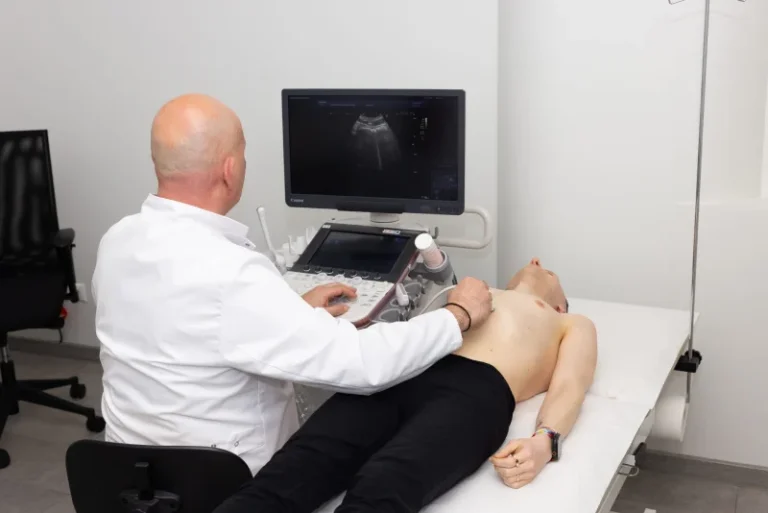
Pregnancy ultrasound (prenatal screening)
- Assessing the baby’s development: organ formation, growth rate and movements can be evaluated.
- Detecting problems: congenital anomalies or growth restriction can be spotted early.
- Placenta and amniotic fluid: the position of the placenta and the amount of amniotic fluid are checked.
- Reassurance for parents: ultrasound lets you see your baby during pregnancy, which strengthens the emotional bond.
Pregnancy ultrasound screening plan
The state programme includes three main ultrasound scans, which are safe, painless and give vital information about your baby’s health.
First-trimester screening, weeks 11–13
- Purpose – accurate dating of the pregnancy and early risk assessment (nuchal translucency, NT).
- Combined test – ultrasound data together with blood tests give an individual risk estimate for the most common chromosomal conditions.
Second-trimester screening, weeks 20–22
- Purpose – a detailed check of the baby’s organs (heart, brain, spine) and the placenta.
- A special moment – this is usually when the baby’s sex can be determined most reliably.
Third-trimester screening, weeks 34–36
- Purpose – assessing the baby’s growth, position and blood flow (Doppler).
- Result – the findings help the doctor or midwife choose the safest way of giving birth for you and your baby.
Comprehensive pregnancy care
During pregnancy, your health and your baby’s health come first. At Republikas laukuma klīnika we offer a multidisciplinary approach that combines medical monitoring with practical and emotional support.
Pregnancy care with a multidisciplinary team
- Gynecologist, obstetrician – monitors the medical course of the pregnancy and plans the birth.
- Midwife – gives practical advice and day-to-day emotional support.
- Nutritionist – helps you plan a balanced diet for you and your baby.
- Pediatrician – takes over after the birth to look after your newborn’s health.
Healthy lifestyle and emotional balance
To help your pregnancy go smoothly, we help you build lasting habits:
- Nutrition and activity – a balanced diet and suitable physical activity.
- Rest – good-quality sleep and giving up harmful habits.
- Emotional connection – psychological support to reduce stress and prepare for your new role as a mother.
Preventing complications – safety first
Regular visits allow us to recognise and address risks in good time:
- Gestational diabetes – a glucose metabolism disorder that develops during pregnancy.
- Pre-eclampsia – high blood pressure (≥140/90 mmHg) and protein in the urine.
- Preterm birth – labour starting before week 37.
- Fetal growth restriction – the baby’s weight or size is behind the expected values, which is assessed accurately by ultrasound.
Pregnancy care is a comprehensive service that protects the health, safety and emotional balance of mother and baby. Regular visits, professional support and an individual care plan are key to a healthy pregnancy and a safe birth.
Frequently asked questions
How often should I see a specialist during pregnancy?
Depending on the stage of pregnancy, visits range from once a month to once a week.
Do I need a special diet during pregnancy?
What matters is a balanced diet with enough protein, vitamins and minerals.
Why is ultrasound important?
It allows the baby’s development to be assessed and possible problems to be detected early.
Is psychological support mandatory?
It is not mandatory, but it is highly recommended because it helps maintain emotional balance.
Have questions?
Contact our reception — we will help you choose a specialist and book an appointment.