
Republikas laukuma klīnika
Electrocardiogram (ECG) in Riga – no waiting lists
An electrocardiogram, or ECG (also written EKG), is a quick, painless and safe test that records the electrical activity of the heart. It helps the doctor assess your heart rhythm, heart rate and how electrical impulses travel through the heart.
Price: €20 · Republikas laukums 3–18, Riga · Tel. 28002363
At Republikas laukuma klīnika you can have an ECG in Riga city centre by appointment, without long waiting times. The test takes about 5–10 minutes and costs €20.
You can have an ECG:
- with a doctor’s referral;
- without a referral, as a paid service;
- before surgery or another medical procedure;
- on the advice of your family doctor or a specialist;
- to assess heart rhythm problems or other symptoms;
- to monitor a chronic condition or its treatment.
Book your ECG by calling 28002363 or online.
What is an electrocardiogram?
The heart contracts because electrical impulses spread through the heart muscle in a set sequence. The ECG machine picks up these impulses through electrodes placed on the chest, arms and legs.
The device does not send any electricity into the body — it only records the electrical signals produced by the heart and shows them as waves.
On an electrocardiogram the doctor can assess:
- heart rate;
- how regular the heart rhythm is;
- how electrical impulses travel through the heart;
- possible arrhythmias;
- conduction disorders;
- some signs of changes in the heart muscle;
- changes that may be linked to certain medicines or electrolyte levels.
ECG results should always be interpreted together with your symptoms, medical history, a doctor’s examination and, if needed, other tests.
When is an ECG needed?
A doctor may recommend an ECG if you have:
- a fast heartbeat;
- an irregular heartbeat;
- palpitations;
- dizziness;
- fainting or episodes of loss of consciousness;
- shortness of breath;
- chest pain or pressure;
- unexplained weakness;
- reduced exercise tolerance;
- high blood pressure;
- a known heart condition;
- a suspected heart rhythm or conduction disorder.
An ECG may also be needed:
- before planned surgery;
- before anaesthesia, as instructed by your doctor;
- when starting or monitoring certain medicines;
- if you have diabetes or another condition that can affect the heart;
- for athletes, on a doctor’s advice;
- to monitor the results of heart treatment;
- to compare with a previous electrocardiogram.
Whether you need a preventive ECG depends on your age, symptoms, health and individual cardiovascular risk factors. There is no single interval that suits everyone.
What can an ECG help detect?
Heart rhythm disorders
An ECG can help detect:
- a heart rate that is too fast (tachycardia);
- a heart rate that is too slow (bradycardia);
- atrial fibrillation;
- extra heartbeats (ectopic beats);
- other heart rhythm disorders.
If a rhythm problem only happens from time to time, a short resting ECG may not show it. In that case the doctor may recommend longer heart rhythm monitoring, such as a Holter monitor.
Conduction disorders
An ECG can show whether electrical impulses travel through the heart as they should. Changes may point to different types of heart block or other conduction disorders.
Possible changes in the heart muscle
An electrocardiogram may show changes that, in a particular clinical situation, suggest strain on the heart muscle, reduced oxygen supply or previous heart muscle damage.
However, an ECG alone cannot confirm or rule out every heart condition. Assessing a possible heart attack may require repeat ECGs, troponin blood tests and other tests.
Effects of medicines or electrolytes
Some medicines and significant changes in electrolyte levels can affect heart rhythm and conduction. In these situations an ECG may be part of your regular health monitoring.
When do you need emergency help?
A planned ECG at a clinic is not a substitute for emergency medical care.
Call 113 or 112 immediately if you have:
- sudden or severe chest pain or pressure;
- chest pain with cold sweats, nausea or marked weakness;
- sudden shortness of breath;
- loss of consciousness;
- a very fast or irregular heartbeat with dizziness, chest pain or shortness of breath;
- any other sudden, severe symptoms that could signal a life-threatening condition.
A normal ECG done earlier does not rule out an acute heart problem if new symptoms have appeared.
How is an ECG done?
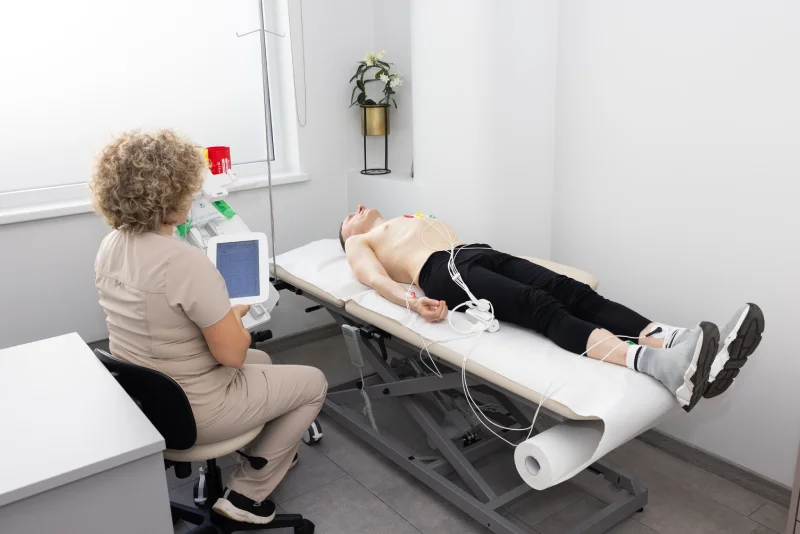
An electrocardiogram is recorded at rest.
During the test:
- You uncover your chest, forearms and lower legs.
- You lie down on a couch.
- A healthcare professional places electrodes on your skin.
- You lie still and relaxed for a few seconds.
- The ECG machine records your heart’s electrical activity.
- The recording is saved or printed for assessment.
If needed, a small area of hair may be removed before the electrodes are attached. This helps the electrodes stick to the skin and improves the quality of the recording.
The whole visit usually takes about 5–10 minutes, although the recording itself is shorter.
Is an ECG painful?
An ECG is painless. The electrodes only pick up the electrical signals produced by the heart, and no electricity is sent into the body.
You may feel a brief pulling sensation when the electrodes are removed. In people with sensitive skin, mild redness or irritation can occasionally appear where the electrodes were attached.
No anaesthetic is needed, and you can carry on with your day straight afterwards.
How to prepare for an ECG
An electrocardiogram usually needs no special preparation. You can eat and drink before the test.
To get a good-quality resting ECG:
- avoid intense exercise shortly before the test;
- arrive a little early so you can sit and rest before the procedure;
- wear clothing that makes it easy to uncover your chest, arms and legs;
- do not apply oily body lotion or oil to your chest;
- tell us about all the medicines you take;
- bring previous ECGs if you have them.
Do not stop taking your regular medicines before an ECG on your own. If your doctor wants the ECG done before a particular dose or at a set time after it, follow their instructions.
ECG price
An electrocardiogram at Republikas laukuma klīnika costs €20.
The ECG recording is available straight after the test. If you need the ECG interpreted, it can be assessed by our family doctor or anaesthesiologist — just mention this when you book.
Can a child have an ECG?
Yes, children can also have an electrocardiogram if a paediatrician or another doctor has recommended it.
A child may need an ECG if they have:
- palpitations;
- chest pain;
- fainting;
- dizziness;
- shortness of breath;
- a suspected rhythm disorder;
- a congenital heart condition;
- a health check before certain treatment or a procedure.
The test is painless. The most important thing is that the child can lie still for a short while. Parents can explain beforehand that small stickers will be put on the body and the machine will just “listen” to the heart.
What does an ECG result mean?
On the ECG the doctor assesses:
- heart rate;
- rhythm;
- where the electrical impulses start;
- how fast and in what order they travel;
- the shape of individual waves and intervals;
- any changes compared with previous ECGs.
A normal ECG is reassuring, but it does not rule out every possible heart condition. Some problems only appear during physical exertion or in short episodes.
If symptoms continue, the doctor may recommend:
- a repeat ECG;
- Holter monitoring;
- echocardiography;
- an exercise test;
- blood tests;
- blood pressure monitoring;
- a consultation with a cardiologist or another specialist.
How is an ECG different from echocardiography?
An ECG records the heart’s electrical activity. It mainly gives information about heart rate, rhythm and conduction.
Echocardiography, or a heart ultrasound, uses sound waves to show the structure and movement of the heart. It helps assess the heart chambers, valves and how well the heart muscle contracts.
These tests do not replace each other. Depending on your symptoms, the doctor may need one or both.
How is a resting ECG different from Holter monitoring?
A resting ECG records the heart’s electrical activity over a short period. It is suitable when rhythm changes are constant or appear during the test.
Holter monitoring records the heart rhythm over a longer period, usually during your normal daily activities. It can help detect intermittent rhythm problems that do not show up on a short ECG.
Do I need an ECG before surgery?
An ECG may be part of the tests before surgery, but it is not automatically needed before every operation.
Whether you need one depends on:
- your age;
- heart and blood vessel conditions;
- current symptoms;
- the type of operation planned;
- the type of anaesthesia;
- the requirements of the hospital performing the surgery.
If your surgeon, family doctor or anaesthesiologist has given you a referral for an ECG, bring it with you.
ECG without waiting lists in Riga city centre
At Republikas laukuma klīnika you can have an ECG by appointment at a time that suits you.
Why patients choose us:
- easy booking online or by phone;
- a short test;
- the ECG recording is available straight away;
- a painless and safe procedure;
- a convenient location in Riga city centre;
- you can give blood samples or see a doctor during the same visit.
Frequently asked questions
Do I need a doctor’s referral for an ECG?
You can have a paid ECG without a referral. If the test is needed because of specific symptoms or treatment, it is best to discuss the results with a doctor.
Do I need to book an ECG in advance?
To avoid waiting, it is best to book in advance online or by calling 28002363.
How long does an ECG take?
The whole procedure usually takes about 5–10 minutes. The recording itself only takes a short moment.
Can I have an ECG during pregnancy?
Yes. A resting ECG uses no ionising radiation and only records the heart’s electrical signals.
Can I eat before an ECG?
Yes, you can eat and drink before a standard resting ECG. Special fasting rules may apply to other heart tests, but not to a standard ECG.
Can an ECG show a heart attack?
An ECG can show changes consistent with an acute or previous heart attack (myocardial infarction). However, a single normal ECG cannot always rule out an acute heart attack. If you have severe chest pain or other acute symptoms, you need emergency medical help.
Does a normal ECG mean my heart is completely healthy?
No. A normal ECG means that no specific abnormalities in electrical activity were found during the short recording. Some heart conditions need other or longer tests.
When will I get my ECG result?
The ECG recording is available straight after the procedure. If you need the ECG interpreted, it can be assessed by our family doctor or anaesthesiologist — just mention this when you book.
Book an ECG in Riga
To book an electrocardiogram, use online booking or call 28002363.
Republikas laukuma klīnika
Republikas laukums 3–18, Riga
“Centra nams”, ground floor
Entrance from the Ministry of Agriculture side
Have a question?
Contact our reception — we will help you choose a specialist and book an appointment.