
A headache can feel pressing, throbbing, stabbing or burning. It can affect the whole head, just one side, the forehead, the temples or the back of the head. Sometimes the pain is short-lived, but at other times it keeps coming back and interferes with work, sleep and everyday activities.
Most headaches are not linked to a dangerous illness, but new, unusual or rapidly worsening pain should not be ignored. It is especially important to get medical help promptly if a headache comes with problems with vision, speech, movement or consciousness.
If your headaches keep coming back, get stronger or change in character, book a neurologist consultation.
Why do headaches happen?
A headache is not one specific disease. It can be a neurological disorder in its own right or a symptom of another health problem.
According to the International Classification of Headache Disorders, headaches are divided into two large groups:
- primary headaches;
- secondary headaches.
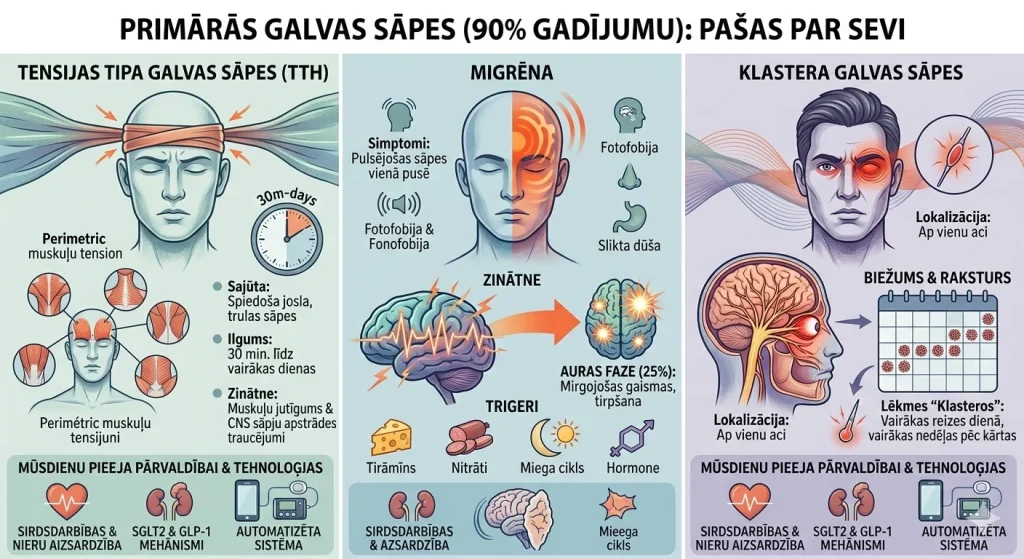
In primary headaches, the pain is the illness itself. This group includes migraine, tension-type and cluster headaches.
Secondary headaches are caused by another health condition, such as an infection, a head or neck injury, overuse of certain medicines or another illness. The doctor’s task is to assess the symptoms and decide whether further tests are needed.
The most common types of headache
Tension-type headache
Tension-type headaches are usually pressing or tightening. Patients often describe them as a tight band around the head.
Typical features:
- the pain is usually felt on both sides of the head;
- it is most often not throbbing;
- the neck and shoulder muscles may be tense;
- everyday physical activity usually does not make the pain much worse;
- nausea is usually not pronounced.
Tension-type headaches can be linked to stress, tiredness, long hours at the computer, lack of sleep or tension in the neck and shoulder muscles.
Migraine
Migraine is a neurological condition that can cause recurring attacks of moderate or severe headache. The pain often, but not always, affects one side of the head.
During a migraine there may be:
- a throbbing headache;
- nausea or vomiting;
- increased sensitivity to light;
- increased sensitivity to sounds or smells;
- pain that gets worse with physical activity;
- a wish to be in a quiet, dark room.
Some patients have an aura before the headache. It can show up as flickering lines, changes in the field of vision, tingling or other temporary neurological symptoms. If such symptoms appear for the first time, a medical assessment is needed.
Cluster headache
Cluster headaches are less common but very intense. They usually affect one side of the head and are centred around the eye or temple.
At the same time, on the same side there may be:
- a red or watering eye;
- a swollen or drooping eyelid;
- a blocked or runny nose;
- facial sweating;
- marked restlessness.
The attacks tend to recur in certain periods, or clusters. With such symptoms you need to see a neurologist, because cluster headache treatment differs from the treatment of migraine and tension-type pain.
Headache at the back of the head
A headache at the back of the head can have various causes. The location of the pain alone does not point to a specific diagnosis.
Possible causes include:
- tense neck and shoulder muscles;
- staying in one position for a long time;
- tension-type headache;
- headache caused by neck structures (cervicogenic headache);
- migraine;
- irritation of the occipital nerves;
- less often – another health condition that needs to be assessed by a doctor.
It is important to notice whether the pain is linked to neck movements, spreads to the temples or eyes, starts after an injury, or comes with dizziness, vision problems, weakness or numbness.
If a headache at the back of the head keeps coming back, gets worse or does not go away, see a doctor.
Headache on the right or left side
A headache on the right side or only on the left side is often linked to migraine, but one-sided pain can also have other causes.
A one-sided headache can be:
- a sign of migraine;
- a cluster headache;
- linked to irritation of facial or occipital nerves;
- linked to neck structures;
- secondary to another health problem.
In migraine, the pain can switch sides between attacks. Very severe pain that always occurs around one eye and comes with a watering eye or blocked nose on the same side may indicate a cluster headache.
The location of the pain on the right or left side does not in itself allow a diagnosis. The onset, duration, intensity and accompanying symptoms also matter.
When can a headache be dangerous?
Call 113 or seek emergency medical help immediately if:
- an extremely severe headache starts suddenly;
- the pain reaches its maximum intensity within seconds or a minute;
- the face droops or an arm or leg becomes weak;
- speech, vision or coordination problems appear;
- there is confusion, marked drowsiness or loss of consciousness;
- there are seizures for the first time;
- the headache started after a serious head injury;
- the headache comes with a high temperature and a stiff neck;
- a rash appears that does not fade when you press a clear glass against it;
- your general condition is getting worse quickly.
You also need to see a doctor urgently if a headache is new and unusual, keeps getting stronger, wakes you up from sleep, or gets worse when coughing, sneezing, bending over or during physical exertion.
When should you see a neurologist?
A neurologist consultation is recommended if:
- headaches keep coming back regularly;
- the pain becomes more frequent or stronger;
- the usual nature of your headaches changes;
- headaches interfere with work, studies or sleep;
- the pain comes with nausea, changes in vision or sensitivity to light;
- painkillers no longer help;
- you need painkillers more and more often;
- the headaches started after an injury;
- there are unclear neurological symptoms;
- preventive migraine treatment needs to be assessed.
A neurologist helps to tell primary headaches apart from situations where another cause of the pain needs to be found.

Dr. Marija Cērpa
Neurologist
How does the doctor find the cause of a headache?
An accurate description of the symptoms is very important in diagnosing headaches. The neurologist will ask:
- when the headaches started;
- how often they come back;
- how long one attack lasts;
- where the pain is felt;
- whether the pain is pressing, throbbing or stabbing;
- how intense the pain is;
- what other symptoms occur at the same time;
- what triggers or eases the pain;
- what medicines you take;
- whether other family members also have headaches.
During the consultation, the doctor carries out a neurological examination, assessing reflexes, muscle strength, sensation, coordination and other nervous system functions.
An MRI or CT scan is not necessary for every patient with headaches. Further tests are ordered if the symptoms, examination results or risk factors suggest a secondary cause of the headache.
Headache diary
Before the neurologist consultation, it is a good idea to note down for at least a few weeks:
- the date and time each headache started;
- how long the pain lasted;
- where the pain was and what it felt like;
- its intensity on a scale from 0 to 10;
- accompanying symptoms;
- possible triggers;
- the medicines you took and how well they worked;
- the day of your menstrual cycle, if it may be linked to the symptoms.
A headache diary helps the doctor see patterns in how the headaches recur and assess the results of treatment.
How are headaches treated?
Treatment depends on the type, frequency and intensity of the headaches and on the patient’s health. No single treatment method suits every patient.
Treatment may include:
- medicines to relieve an acute attack;
- specific therapy for migraine;
- preventive treatment for frequent attacks;
- sorting out sleep and daily routine;
- regular meals and enough fluids;
- physical activity;
- stress management;
- setting up an ergonomic workplace;
- physiotherapy when indicated.
It is best to discuss the choice of medicines and how often to take them with a doctor. Taking painkillers too often can itself lead to medication-overuse headache.
What can be done to prevent headaches?
The risk of headaches can sometimes be reduced by:
- a regular sleep pattern;
- drinking enough fluids;
- regular meals;
- moderate physical activity;
- breaks during long periods of work;
- reducing tension in the neck and shoulder muscles;
- recognising your individual migraine triggers;
- keeping a headache diary;
- following the preventive therapy prescribed by your doctor.
There is no need to give up many foods without good reason. First, check in your diary whether a particular factor is repeatedly linked to headache attacks.
Frequently asked questions
Why does the back of my head hurt?
A headache at the back of the head can be linked to tension in the neck and shoulder muscles, tension-type headache, migraine, pain caused by neck structures or irritation of the occipital nerves. If the pain keeps coming back or gets worse, see a doctor.
What can a headache on the right side mean?
A one-sided headache can be a sign of migraine or cluster headache, but other causes are also possible. A diagnosis cannot be made from the location of the pain alone.
Can high blood pressure cause headaches?
Mildly or moderately raised blood pressure often causes no specific symptoms. Headaches can be linked to a very marked rise in blood pressure or another health condition, so your blood pressure should be measured and the overall situation assessed.
Do all patients with headaches need an MRI?
No. The doctor decides whether the test is needed, taking into account the nature of the headaches, the results of the neurological examination and possible risk factors.
When should I see a neurologist about headaches?
See a neurologist if your headaches keep coming back, become more frequent or stronger, change in character, interfere with everyday activities or require frequent use of painkillers.
Neurologist consultation for headaches
If headaches keep coming back or their cause is unclear, a neurologist consultation helps assess the symptoms, determine the likely type of headache and prepare an individual plan for tests and treatment.
Republikas laukuma klīnika is located in the quiet centre of Riga, at Republikas laukums 3–18, on the ground floor of “Centra nams”. The entrance is on the side of the Ministry of Agriculture.
- Phone: 28002363
- Address: Republikas laukums 3–18, Riga
Book a neurologist consultation
Questions about your health?
Specialist doctors see patients at Republikas laukuma klīnika in central Riga. Our reception will help you choose the right specialist and time.