
Do your calves start to ache or cramp when you walk, so you have to stop — yet after a few minutes of rest you can carry on? If this keeps happening, don’t automatically put it down to age, a lack of magnesium or being out of shape. One possible cause is reduced blood supply to the leg muscles due to narrowed arteries.
This symptom is called intermittent claudication. It may be a sign of peripheral artery disease. However, not all calf pain is caused by circulation problems — the cause is determined during a medical examination and, if needed, further tests.
At Republikas laukuma klīnika in central Riga, leg artery Doppler ultrasound is available to assess your arteries and blood flow.
Why do your calves hurt when walking, but the pain goes away when you stop?
When you walk, your leg muscles need more oxygen. If an artery is narrowed, not enough blood may get through it during exertion. This causes pain, cramping, heaviness or fatigue in the muscle. When you stop, oxygen demand falls and the discomfort usually eases within a few minutes.
Circulation problems typically mean that:
- the pain recurs after walking a similar distance;
- it starts sooner when you walk faster or uphill;
- simply stopping is enough for the discomfort to ease;
- the pain returns when you start walking again.
Depending on where the arteries are affected, the pain may occur not only in the calves but also in the thighs or buttocks. Symptoms may affect one or both legs.
What is peripheral artery disease?
Peripheral artery disease is a condition in which narrowed or blocked arteries restrict the blood supply to tissues. In the leg arteries, the most common cause is atherosclerosis — changes in the vessel wall with the build-up of atherosclerotic plaques.
The risk is increased by smoking, diabetes, high cholesterol, high blood pressure, chronic kidney disease and older age. The disease can also be present in people who have no typical pain.
Peripheral artery disease matters for more than just leg health. It may indicate atherosclerosis in other parts of the vascular system and a higher risk of heart attack and stroke.
Does calf pain always mean narrowed arteries?
No. Similar discomfort can be caused by muscle strain, spinal stenosis, nerve irritation or joint disease.
| Type of pain | Possible explanation |
|---|---|
| Recurs when walking and eases simply by stopping | Possible arterial circulation problems |
| Eases mainly when sitting down or leaning forward | Possible spinal stenosis |
| Starts after unaccustomed exertion and persists afterwards | Possible muscle strain |
| Accompanied by tingling, burning or numbness | Possible nerve damage or irritation |
These signs are only a guide. Several problems can exist at the same time, so the table does not replace a doctor’s assessment.
When should you see a doctor?
Make an appointment if pain when walking keeps recurring, you can walk shorter and shorter distances, or the discomfort limits your daily life. This is especially important for smokers and people with diabetes or known atherosclerosis.
Also tell your doctor about a cold feeling in one foot, changes in skin colour and wounds that heal poorly. If your foot hurts at rest, especially at night, or a non-healing wound appears, you need urgent medical assessment — don’t wait in the usual queue for a routine examination.
When should you call 113 immediately?
Sudden, severe leg pain together with a cold or pale foot, numbness or muscle weakness may indicate an acute arterial blockage. This is an emergency. Do not wait for a scheduled Doppler ultrasound.
Sudden swelling, tenderness and warmth in one leg, on the other hand, may indicate deep vein thrombosis and require urgent medical assessment. If you also have shortness of breath or chest pain, call 113.
How is blood flow in the leg arteries checked?
The assessment begins with a consultation and examination. The doctor asks after what distance the pain starts, how quickly it goes away and what vascular risk factors you have. The examination covers the skin of the feet, temperature, wounds and pulses.
An important initial test is the ankle–brachial index (ABI): a comparison of blood pressure at the ankle and the upper arm. If symptoms persist but the resting result is normal, the doctor may recommend additional measurements after exercise. In people with diabetes or kidney disease, arterial stiffness can affect the result; other tests, such as toe pressure measurements, may then be needed.
Based on the findings, the doctor decides on further tests. Not every patient needs all vascular examinations straight away.
What does a leg artery Doppler ultrasound show?
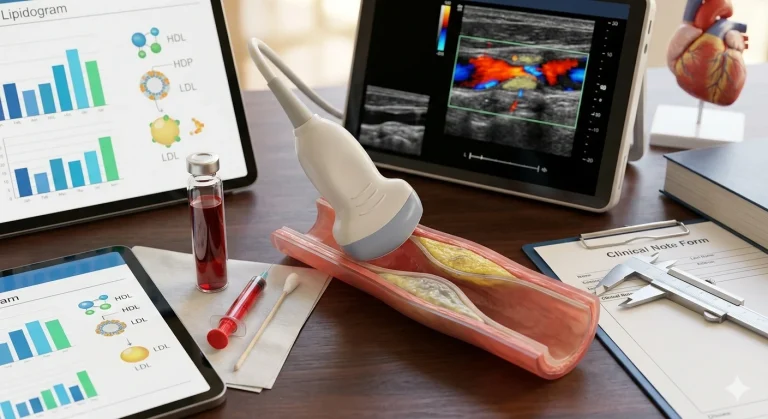
Arterial duplex ultrasound combines an image of the blood vessels with blood flow measurements. It helps locate a narrowing or blockage and assess its effect on blood flow.
The test is particularly useful when a more precise assessment of the arteries is needed or when a procedure to restore blood flow is being planned. In some cases, further imaging is needed afterwards.
During the procedure, gel is applied to the skin and an ultrasound probe is moved over it. No ionising radiation is used, and injections are usually not needed. If the pelvic or abdominal arteries are also being examined, check the preparation requirements when booking.
How does an arterial Doppler differ from a vein scan?
Arteries carry blood to the tissues of the legs, while veins return it to the heart. Arterial and venous Doppler ultrasound answer different questions.
Pain during exertion can be a reason to check the arteries. Swelling, varicose veins or suspected thrombosis call for a vein assessment. When booking, describe your symptoms and state the test your doctor has referred you for. A vein scan does not replace an artery check.
How is narrowing of the leg arteries treated?
The aims of treatment are to improve walking ability, protect the tissues of the leg and reduce the risk of cardiovascular complications.
Treatment may include quitting smoking, doctor-supervised structured walking exercise, cholesterol and blood pressure control, diabetes management and individually prescribed medication. Do not start taking aspirin or other medicines that affect blood clotting on your own.
If symptoms significantly limit your life or the blood supply to tissues is at risk, a vascular surgeon will assess whether endovascular treatment or surgery is needed. A narrowed artery does not automatically mean surgery.
Walking exercise is adjusted according to the diagnosis and your doctor’s instructions. If you have sudden symptoms, pain at rest or wounds, do not start exercising in an attempt to “walk off” the pain.
Frequently asked questions
Will magnesium help with calf pain when walking?
If the cause is a narrowed artery, magnesium will not fix it. Recurring pain on exertion should be assessed first, not treated with dietary supplements alone.
Does normal foot colour rule out circulation problems?
No. Blood flow can be insufficient during exertion even without obvious skin changes at rest.
Can I keep walking?
In stable peripheral artery disease, structured walking is part of the treatment. But first the cause of the symptoms must be established and a suitable level of activity agreed.
Which doctor should I see?
An initial assessment can be carried out by your family doctor (GP). If arterial disease is suspected, a vascular surgeon will help determine the necessary tests and treatment plan.
Leg artery Doppler ultrasound in central Riga
If calf pain keeps recurring when you walk and eases after you stop, book a medical assessment. Leg artery Doppler ultrasound is available at Republikas laukuma klīnika. When booking, mention that you specifically need an artery check.
Questions about your health?
Specialist doctors see patients at Republikas laukuma klīnika in central Riga. Our reception will help you choose the right specialist and time.