Breastfeeding is the most natural and healthiest way to ensure a child’s development and health. If difficulties arise, one should not hesitate to seek help—a breastfeeding consultation under a pediatrician’s supervision will help solve problems and provide support for both mother and child.
Why is breastfeeding consultation important?
Breastfeeding is one of the most essential foundations of a child’s health. Breast milk contains all the necessary nutrients, antibodies, and enzymes that:
- Strengthen the immune system and protect against infections.
- Promote healthy digestive system function.
- Provide fatty acids for brain and nervous system development.
- Help the child grow and gain weight.
- Foster a close emotional bond between mother and child, which is vital for psychological well-being.
The World Health Organization (WHO) recommends exclusive breastfeeding for at least the first 6 months, continuing breastfeeding in combination with complementary foods up to 2 years of age and beyond, if possible.
Breastfeeding does not always go smoothly, and many mothers have questions or face challenges. A breastfeeding consultation with a pediatrician is recommended if there are suspicions of:
- The child not gaining weight or losing weight.
- The mother feeling that the milk supply is insufficient.
- The child frequently refusing the breast or becoming restless during feeding.
- Pain, cracks, or nipple inflammation.
- A need to adjust the frequency and duration of feeding.
- The mother seeking advice on expressing and storing milk.
- Questions regarding combined feeding (breast milk + formula).
Timely consultation helps prevent problems and ensures the child receives everything necessary for healthy development.
What does a breastfeeding consultation include?
During the consultation, the doctor:
- Evaluates the child’s weight, height, and developmental indicators.
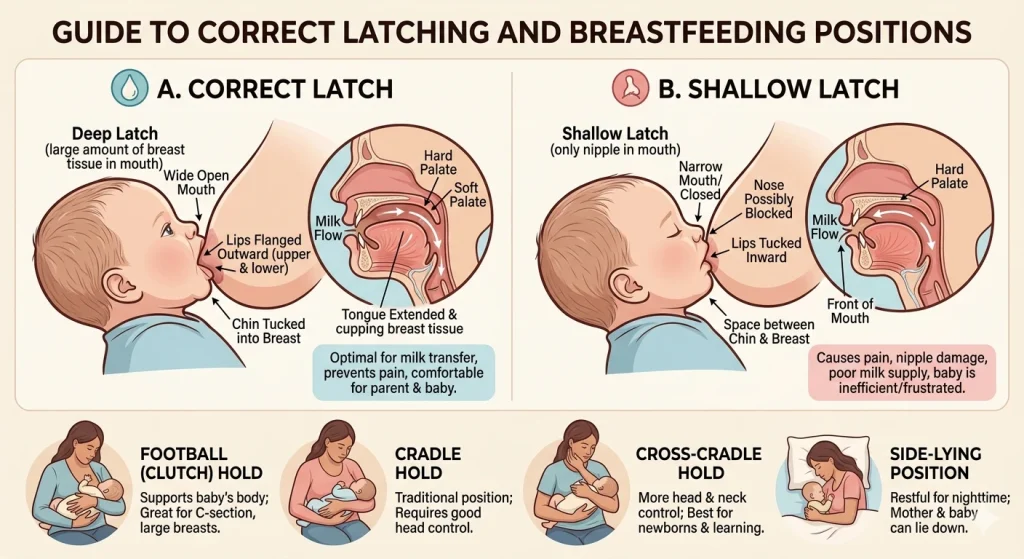
- Checks feeding reflexes and sucking technique.
- Provides practical advice on the child’s position during breastfeeding.
- Recommends optimal feeding frequency and duration.
- Helps resolve issues with milk supply.
- Provides recommendations on the mother’s diet and fluid intake.
- Explains how to safely express and store breast milk.
- Consults on the transition to complementary foods when the child reaches the appropriate age.
Benefits of breastfeeding for the child
- Immunity – antibodies in breast milk protect against infections and allergies.
- Digestive system – milk is easily digestible and suitable for the child’s intestinal microflora.
- Development – fatty acids and proteins promote the maturation of the brain and nervous system.
- Emotional connection – breastfeeding strengthens the child’s sense of security and emotional contact with the mother.
Support for mothers
A breastfeeding consultation is not just medical advice—it is also emotional support for new mothers. A pediatrician helps reduce anxiety, answers questions, and provides confidence that the mother can provide the best care for her child.
The consultation also includes recommendations regarding:
- Maternal nutrition and hydration.
- Sleep patterns and rest.
- Stress reduction and emotional well-being.
How to apply for a breastfeeding consultation?
At the “Republikas laukuma klīnika”, a pediatrician offers individually tailored breastfeeding consultations. These include both practical help in improving feeding techniques and recommendations for the mother’s diet, sleep, and emotional health.

Dr. Jeļena Liepa
Frequently asked questions
Signs include: the baby wets diapers regularly (at least 5–6 times a day); the baby gains weight according to age; swallowing is audible during feeding; the baby appears satisfied after eating.
No – there should not be long-term pain during breastfeeding. Slight sensitivity in the first few days is possible, but intense or persistent pain usually indicates a problem.
A newborn should be fed on demand, not by the clock. This means every time the baby shows signs of hunger (moving the mouth, putting hands to the mouth, restlessness).