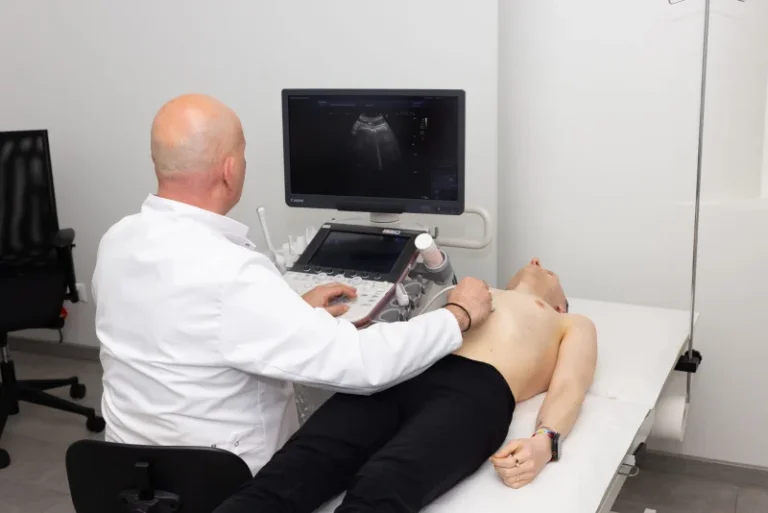
Republikas laukuma klīnika offers convenient blood and other laboratory sample collection in central Riga. Tests are processed in cooperation with an accredited partner laboratory.
You can have laboratory tests performed with a doctor’s referral or request selected tests without a referral. If you are unsure which tests are appropriate, our family doctor or another specialist can assess your symptoms and recommend the necessary examinations.
Before your visit, please contact the clinic to confirm availability, preparation requirements and whether an appointment is needed.
To book laboratory testing, call 28002363
Laboratory tests available
The required tests depend on your symptoms, medical history, diagnosis and the purpose of the examination. Laboratory testing may be used for preventive health checks, diagnosis, treatment monitoring or preparation for a medical procedure.
Commonly requested tests include:
- complete blood count;
- blood glucose and HbA1c;
- cholesterol and lipid profile;
- liver and kidney function tests;
- electrolytes and minerals;
- iron, ferritin and vitamin levels;
- thyroid and other hormone tests;
- inflammation markers;
- blood coagulation tests;
- allergy and immunology tests;
- tests for selected infections;
- urine and stool tests.
The availability and preparation requirements of a specific test should be confirmed before sample collection.
Blood tests
Blood tests can provide important information about your general health and help a doctor investigate symptoms or monitor an existing condition.
A complete blood count evaluates different types of blood cells and may help identify anaemia, infection or other abnormalities. Biochemical tests can assess blood glucose, cholesterol, liver and kidney function, electrolytes, iron stores and other health indicators.
Hormone tests may be recommended when investigating thyroid disorders, menstrual changes, fertility concerns or other endocrine conditions. Infection, inflammation, coagulation and immunology tests are selected according to the patient’s symptoms and clinical history.
Laboratory results should not be interpreted in isolation. A result outside the reference range does not always indicate a disease, while a result within the reference range does not necessarily exclude one. Your symptoms, medical history, medication and previous results must also be considered.
Do I need a referral?
Many laboratory tests can be performed without a doctor’s referral. However, choosing tests without medical guidance may lead to unnecessary examinations or make the results difficult to interpret.
A doctor’s consultation is particularly useful if:
- you have persistent or unexplained symptoms;
- you need tests before starting or adjusting treatment;
- previous results were outside the reference range;
- you have a chronic medical condition;
- several related tests may be required;
- you need a medical assessment rather than a general health check.
At Republikas laukuma klīnika, you can arrange a consultation with a family doctor or another specialist before or after laboratory testing.
How to prepare for a blood test
Preparation depends on the specific test. Most blood tests do not require fasting, but some examinations must be performed under particular conditions.
Before sample collection:
- follow the instructions provided by your doctor or the clinic;
- drink enough water unless you have been advised otherwise;
- inform the medical professional about medicines, vitamins and supplements you take;
- avoid strenuous exercise before tests that may be affected by physical activity;
- do not stop prescribed medication unless instructed by a doctor;
- arrive at the recommended time if the test is affected by daily hormonal or metabolic changes.
If fasting is required, you will be told how long you should avoid food. Plain water is generally permitted. According to E. Gulbis Laboratory, fasting is not required for most blood tests, although individual tests may have specific requirements. Preparation guidance from E. Gulbis Laboratory
Please call 28002363 if you are unsure whether you should fast.
Urine tests
Urine testing may help assess urinary tract infections, kidney function, diabetes and other conditions. The required collection method depends on the type of test.
Unless you have received different instructions, a routine urine sample is usually collected:
- in a sterile laboratory container;
- from the first urine passed in the morning;
- after washing the external genital area;
- by collecting the middle part of the urine stream;
- without touching the inside of the container or lid.
The sample should be delivered according to the instructions provided by the clinic or laboratory. Some urine tests require a different collection method or samples collected over a specified period.
Stool and other samples
Stool tests may be used to investigate gastrointestinal symptoms, inflammation, infection, bleeding or other digestive conditions.
The sample should be collected in a clean, suitable container and must not be contaminated with urine, toilet water or cleaning products. Different examinations may require different sample quantities, containers or preparation.
Contact the clinic before collecting a stool or another type of sample so that we can provide the correct instructions.
What happens during blood sample collection?
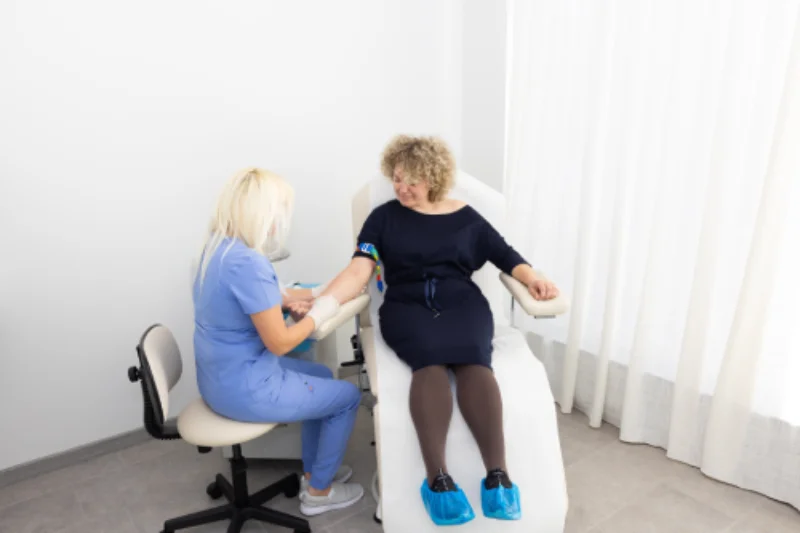
A medical professional collects a small blood sample, usually from a vein in the arm. The procedure generally takes only a few minutes.
Please tell the medical professional if you:
- have previously felt faint during blood collection;
- are taking blood-thinning medication;
- have a bleeding or clotting disorder;
- have difficult venous access;
- are anxious about needles.
After blood collection, pressure is applied to the puncture site. A small bruise may occasionally appear and usually resolves without treatment.
How much does a blood test cost in Riga at our clinic?
Sample collection and handling at Republikas laukuma klīnika is a flat €10, on top of the laboratory’s own price for each test — prices vary by panel since we work with E. Gulbja Laboratory’s price list. If you want a broader check rather than a single marker, our health checkup packages (from €180) already bundle a full panel of tests with a doctor’s review, which is usually more cost-effective than pricing tests one by one. Call +37128002363 and we’ll quote your specific tests before you book.
Receiving and interpreting your results
The time required to process laboratory tests varies. Many routine results become available relatively quickly, while specialised tests may take longer.
Ask the clinic how you will receive your results and when they are expected. If a doctor ordered the tests, arrange an appropriate follow-up to discuss them.
A medical consultation is recommended when:
- a result is outside the laboratory reference range;
- your symptoms continue despite apparently normal results;
- repeat or additional testing has been recommended;
- treatment decisions depend on the results;
- you do not understand the significance of a result.
The doctors at Republikas laukuma klīnika can evaluate the results together with your symptoms, medical history and current treatment.
Why choose Republikas laukuma klīnika?
- Convenient location in central Riga
- Laboratory sample collection in a clinical environment
- Cooperation with E. Gulbis Laboratory
- Tests available with or without a doctor’s referral
- Access to family doctors and medical specialists
- Possibility to arrange consultations and diagnostic examinations in one clinic
- Assistance available to local and international patients

Dr. Ruslans Mihailovskis
The clinic is located at Republikas laukums 3–18, on the first floor of Centra nams. The entrance is on the side facing the Ministry of Agriculture.
Frequently asked questions
Can I have a blood test without a doctor’s referral?
Many commonly requested laboratory tests can be performed without a referral. However, a doctor can help select the appropriate tests and interpret the results in the context of your health and symptoms.
Do I need an appointment?
Please contact the clinic before your visit to confirm the sample collection time and availability of the required tests. Call 28002363.
Do I need to fast before a blood test?
Most blood tests do not require fasting. Some tests have specific preparation requirements, so follow the instructions given by your doctor, the clinic or the laboratory.
Can I drink water before a blood test?
Plain water is generally permitted and may make blood collection easier. Follow any specific instructions you have received for your examination.
How quickly will I receive the results?
Processing times depend on the test. Routine results may be available sooner, while specialised tests can take several working days. The clinic can provide an estimated timeframe for the tests you require.
Can a doctor explain my results?
Yes. You can book a consultation with a family doctor or another relevant specialist to discuss the results and determine whether further examination or treatment is necessary.
Are consultations available in English?
Please mention your preferred language when booking so that the clinic can arrange a suitable specialist.
Book laboratory testing in Riga
To confirm the required tests, preparation instructions and available sample collection times, contact Republikas laukuma klīnika:
Phone: 28002363
Address: Republikas laukums 3–18, Riga
Location: Centra nams, first floor; entrance from the side of the Ministry of Agriculture