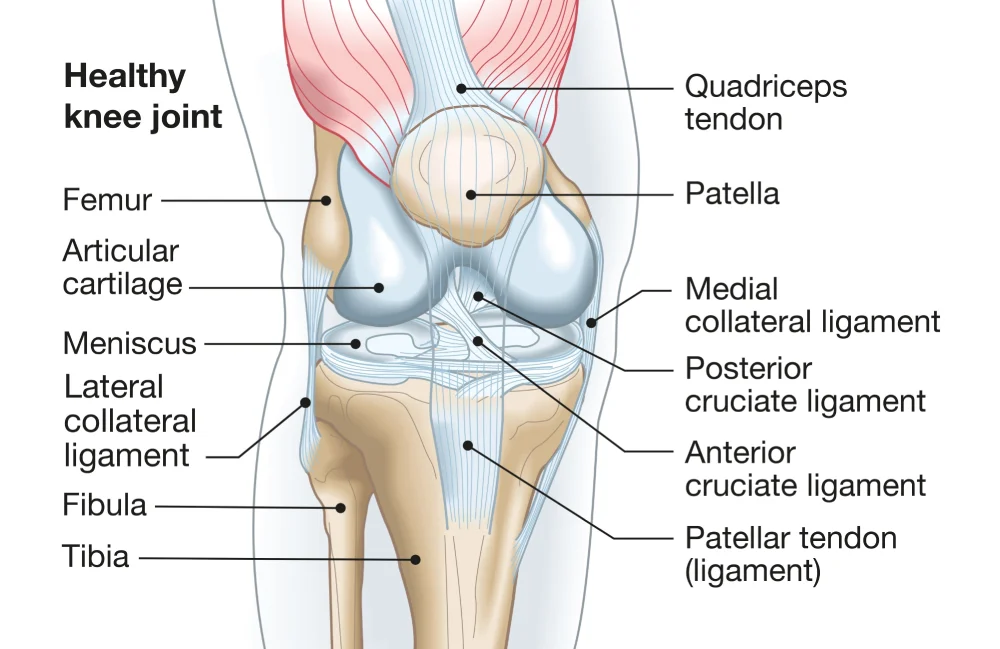
A meniscus tear is a serious knee joint injury that can significantly impact quality of life. The meniscus itself rarely heals on its own, making timely diagnosis and treatment essential. Arthroscopy is an effective and safe method that allows for the preservation or restoration of meniscus function. While rehabilitation ensures full recovery, the traumatologist plays a central role in the entire process—from diagnosis to the return to sports or daily activities.
What is the meniscus tear?
A meniscus tear occurs during sudden movements, twists, or trauma, but it can also develop gradually due to degenerative processes, especially after the age of 40.
Symptoms of a meniscus tear
- Knee joint pain, especially during movement or squatting
- Swelling and stiffness
- Clicking, a sensation of locking, or “catching” in the knee
- Limited range of motion
- A feeling of instability
Does the meniscus heal on its own?
The meniscus’s ability to regenerate is limited because only the outer part (the “red zone”) has a blood supply. Small tears in the peripheral zone may heal on their own, but most tears in the central part (“white zone”) will not recover without treatment. Therefore, a traumatologist evaluates the extent of the damage to determine whether a conservative approach is possible or if surgery is required.
Diagnosis of a meniscus tear
- Physical examination: (McMurray test, Apley test)
- Magnetic Resonance Imaging (MRI): The most accurate method for identifying meniscus damage.
- Arthroscopy: Both a diagnostic and treatment method.
Treatment options
Conservative treatment
- Rest, Ice, Compression, Elevation (RICE principle)
- Non-steroidal anti-inflammatory drugs (NSAIDs)
- Physical therapy to strengthen muscles and improve stability
- Knee braces – this approach is suitable for small tears or patients with low physical demands.
Surgical treatment – knee arthroscopy
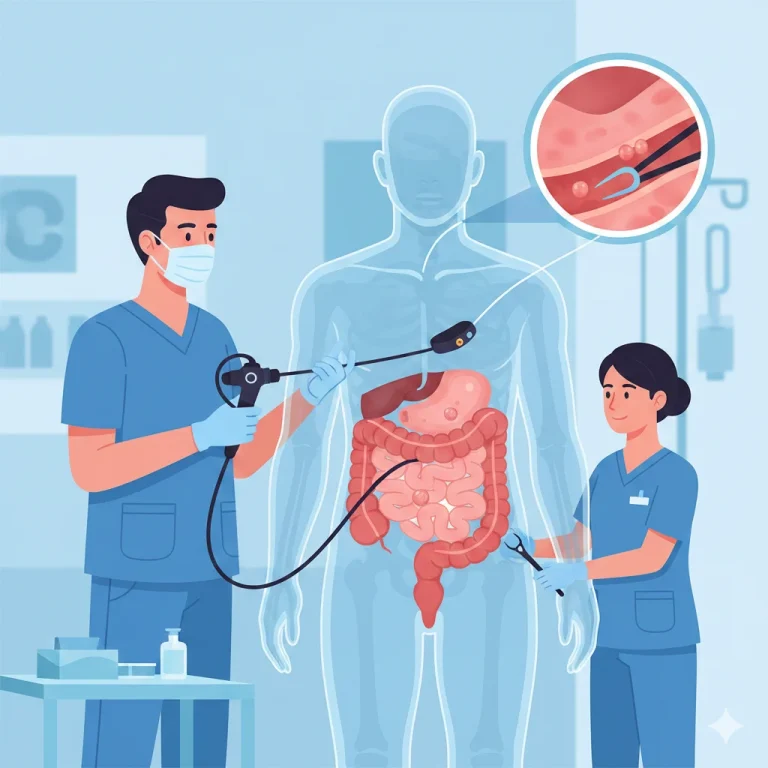
Arthroscopy is a minimally invasive surgery where a camera and instruments are inserted into the knee through small incisions. Depending on the damage:
- Meniscus repair: If the tear is in the peripheral zone with good blood supply.
- Meniscectomy (partial removal): If the damage is irreparable.
- Meniscus transplantation: In rare cases for young patients with complete loss of the meniscus.
Rehabilitation
Rehabilitation is just as important as the surgery itself. Without it, full recovery is impossible.
Stages of rehabilitation
- Acute phase (0–2 weeks): Reducing swelling, maintaining mobility, passive exercises.
- Early mobilization (2–6 weeks): Gradual increase in load, muscle activation.
- Restoring strength and movement (6–12 weeks): Resistance exercises, balance training.
- Return to sports and activity (3–6 months): Dynamic exercises, running, sport-specific training.
A full return to sports after meniscus repair is usually possible within 4–6 months; after a partial meniscectomy, it is faster—around 6–8 weeks.
The importance of a traumatologist-orthopedist
The traumatologist-orthopedist is the primary specialist for meniscus tears. Their responsibilities include:
- Accurate diagnosis and determining the type of tear.
- Choosing the treatment plan (conservative or surgical).
- Performing the surgery (arthroscopy).
- Supervising and adjusting rehabilitation.
- Educating the patient on prevention and avoiding re-injury.

Dr. Dmitrijs Bodrovs
Without the involvement of a traumatologist-orthopedist, the patient risks choosing an inappropriate treatment, which can lead to chronic pain and early knee osteoarthritis.
Prevention
- Regular muscle strengthening, especially the quadriceps and calf muscles.
- Proper warm-up before sports.
- Avoiding sudden, uncontrolled movements.
- Using appropriate footwear and equipment.
Frequently asked questions
Small tears in the peripheral zone can heal on their own, but most tears in the central part do not recover without medical intervention.
Small tears are treated conservatively with cold therapy, exercise, and muscle strengthening, while larger tears require knee arthroscopy.
In simpler cases, 2 months; however, in cases of more extensive damage, it can take up to 6 months.