Nowadays, more and more patients are looking for effective and safe methods to reduce joint pain and improve quality of life while avoiding aggressive surgeries. One of the most modern options is PRP injections in the joints – Platelet-Rich Plasma therapy, also available at “Republikas laukuma klīnika”. This method is particularly relevant for those with an active lifestyle, athletes, and people who experience daily joint pain or discomfort.
In this article, we will look in detail at what PRP injections are, how they work, in which cases they are recommended, how to prepare for the procedure, and what results can be expected.
What are PRP injections for joints?
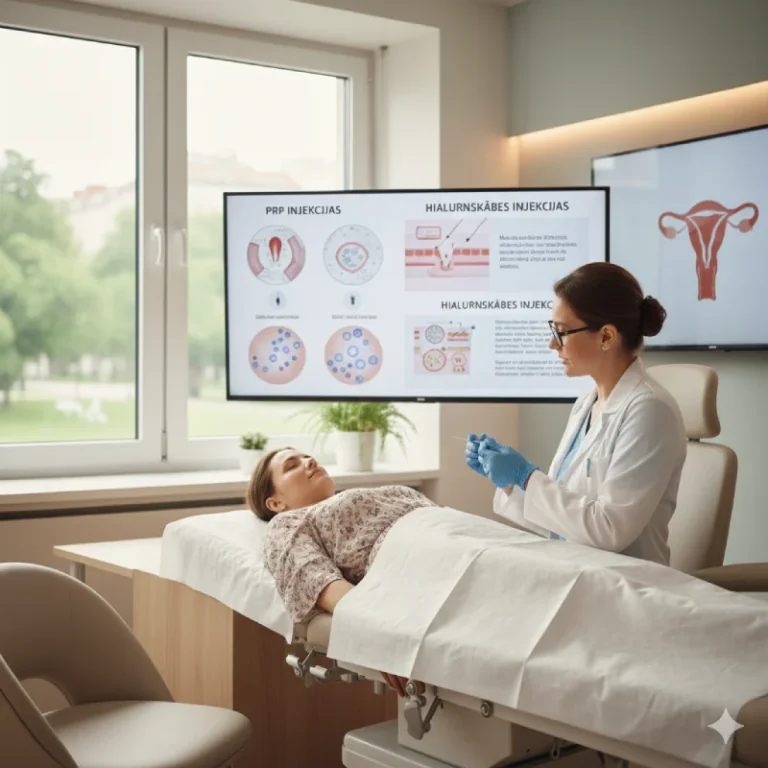
PRP (Platelet Rich Plasma) injections are a minimally invasive biological treatment method during which plasma obtained from the patient’s own blood is injected into the joint. The plasma contains a high concentration of platelets, which release growth factors and stimulate tissue renewal processes.
Unlike traditional methods, such as joint blocks with corticosteroids, PRP injections not only reduce pain but also promote tissue healing and regeneration. This makes the procedure an effective alternative for patients seeking long-term results.
In which cases are PRP injections necessary?
Traumatologists and orthopedists often recommend PRP injections for patients with the following problems:
- Osteoarthritis – degenerative joint damage causing pain and movement restrictions.
- Chondropathy – knee cartilage damage and wear.
- Ligament tears and sprains – especially for athletes and active people.
- Soft tissue injuries – tendon and muscle damage.
- Prophylactically before surgery – to improve the condition of the joint and prepare it for surgical intervention.
- Knee joint arthrosis and wear.
- Shoulder joint tendon damage.
- Heel “spurs” (plantar fasciitis).
- Sports injuries – ligament and muscle tears.
- Chronic back pain.
These indications confirm that PRP injections are suitable for both young and elderly patients who want to maintain mobility and avoid chronic pain.
How do PRP injections work for joint pain?
Joint degeneration is an irreversible process – damaged cartilage does not restore itself. However, PRP injections help slow down the progression of damage and reduce symptoms.
- Platelets contain growth factors that stimulate cell regeneration.
- They improve blood circulation and metabolism in the joint tissues.
- The procedure reduces inflammation and pain.
- As a result, joint function and mobility are improved.
During consultations, a traumatologist increasingly recommends PRP injections as an alternative to traditional joint blocks, as this method not only reduces pain but also promotes tissue restoration.
Preparation for PRP injections
Careful preparation is required before a PRP injection:
- Consultation with a traumatologist-orthopedist – the doctor evaluates the patient’s health and determines indications for the procedure.
- Radiological examinations – X-ray, MRI, or ultrasound to accurately determine the extent of the damage.
- Exclusion of acute illnesses – the procedure is not performed if the patient has a cold or other infections.
- Planning – it is not recommended to perform the injection before intense physical exertion.
After the procedure
To ensure maximum effect, certain recommendations must be followed after the PRP injection:
- Rest regime for 10–14 days – light walking or cycling is allowed, but heavy exertion should be avoided.
- Non-use of anti-inflammatory medications – for the first 3 days and 10 days after the procedure, medications like Ibumetin, Dolmen, Nalgedol, Arcoxia, Bericox, etc., must not be used.
- Pain reduction is usually felt within 3–5 days.
How many prp injections are needed?
In most cases, one injection is sufficient. If necessary, the procedure is repeated after 2–3 weeks. For a lasting effect, PRP injections can be performed once a year.
What is the price of a prp injection?
A single PRP injection at “Republikas laukuma klīnika” costs € 230.00.
PRP injections or joint block – which to choose?
Traditionally, joint blocks with corticosteroids are used to treat knee pain. They quickly reduce pain and inflammation, but the effect is short-term and does not affect tissue restoration. In contrast, PRP injections:
- Provide a longer-lasting effect.
- Promote tissue healing.
- Are a biological and safe method using the patient’s own blood. Traumatologist Dr. Bodrovs will help evaluate which method is most suitable in each specific case.
The role of a traumatologist in PRP therapy
The traumatologist is the key specialist who evaluates the joint condition and determines the most appropriate treatment tactic. At “Republikas laukuma klīnika,” the traumatologist offers PRP injections as well as other methods, including joint blocks, physiotherapy, and surgical interventions if necessary.

Dr. Dmitrijs Bodrovs
Advantages of PRP injections
- Biological and safe method.
- Reduced pain and inflammation.
- Promotes tissue healing and regeneration.
- Reduces the need for surgery.
- Especially suitable for active people and athletes.
Frequently asked questions
The PRP procedure is comparable to a regular blood test and intramuscular injection. Discomfort is minimal as very thin needles are used.
The first improvements are usually felt within 2–4 weeks after the first injection.
Since PRP is obtained from the patient’s own blood, there is no risk of allergic reactions or rejection.