IV therapy under medical supervision
Republikas laukuma klīnika provides intravenous infusion therapy and medication administration in central Riga. Treatment is selected according to the patient’s health, symptoms, laboratory results and the referring doctor’s instructions.
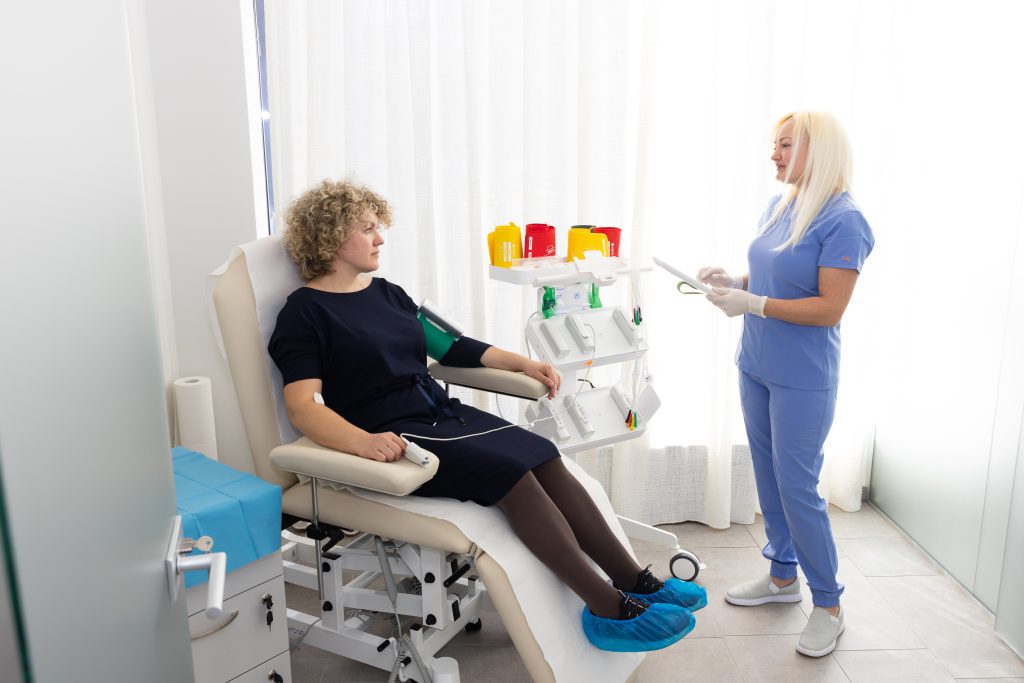
Infusions are administered by qualified medical professionals under medical supervision. Before the first procedure, a doctor evaluates whether IV therapy is appropriate and determines which preparation, dose and infusion rate can be used safely.
Patients who already have a referral or treatment plan from another doctor may bring it to the appointment.
To arrange an IV therapy appointment, call +371 28002363 or contact us via WhatsApp.
What is IV therapy?
Intravenous therapy, also known as IV or infusion therapy, is a medical procedure in which fluids, vitamins, minerals or prescribed medication are administered directly into a vein.
Because the preparation enters the bloodstream directly, its administration and dose can be accurately controlled. However, intravenous treatment is not automatically better than oral medication and should only be used when there is an appropriate medical indication.
At Republikas laukuma klīnika, each infusion is selected individually. We do not recommend using the same standard IV “cocktail” for every patient.
IV therapy available at our clinic
Iron infusions
Intravenous iron may be recommended for patients with confirmed iron deficiency or iron-deficiency anaemia when:
- oral iron is not sufficiently effective;
- oral preparations cause significant side effects;
- iron cannot be adequately absorbed;
- iron stores need to be restored within a clinically appropriate time;
- a doctor has prescribed intravenous iron after reviewing the test results.
Before an iron infusion, recent blood tests are usually required, including a full blood count and ferritin. Depending on the patient’s condition, the doctor may also request transferrin saturation, C-reactive protein and other tests.
The clinic uses prescribed iron preparations such as Monofer or Venofer. The preparation and dose are determined by a doctor.
The price of an iron infusion depends on the prescribed preparation and dose. An infusion containing five Monofer ampoules costs €185.
Rehydration infusions
Intravenous fluids may be used when a doctor identifies dehydration or an inability to replace sufficient fluids orally.
Possible reasons for medical assessment include:
- fluid loss due to vomiting or diarrhoea;
- inadequate fluid intake;
- recovery following an illness;
- significant physical exertion or exposure to heat;
- weakness associated with dehydration;
- difficulty tolerating fluids orally.
IV fluids are not required for every case of tiredness or mild dehydration. The doctor will first assess whether drinking fluids and using oral electrolyte solutions would be sufficient.
Vitamin and mineral infusions
Intravenous vitamins or minerals may be administered when there is an appropriate indication, a confirmed or suspected deficiency, an absorption problem or another reason identified by a doctor.
Preparations used at the clinic may include:
- vitamin C;
- B-group vitamins;
- magnesium;
- other vitamins, minerals or prescribed preparations.
The composition and dose are selected after reviewing the patient’s health, medication and laboratory results. Intravenous vitamins should not be treated as a substitute for a balanced diet or appropriate treatment of an underlying medical condition.
Vitamin C infusions start from €45.
B-group vitamin infusions start from €45.
Glutathione infusions
Glutathione is an antioxidant naturally produced by the body. Intravenous glutathione may be offered following an individual medical assessment.
Evidence for many advertised wellness, anti-ageing and skin-lightening claims remains limited. The doctor will explain the realistic purpose, potential benefits and limitations of the treatment before it is administered.
Glutathione infusions start from €85.
Infusions following excessive alcohol consumption
Excessive alcohol intake can cause dehydration, nausea, vomiting, headache and electrolyte disturbances. When symptoms are pronounced, a doctor can assess whether intravenous fluids or other prescribed treatment is appropriate.
An infusion does not accelerate the removal of alcohol from the body and does not prevent alcohol-related complications. Patients with confusion, loss of consciousness, breathing problems, seizures, chest pain or other severe symptoms require emergency medical assistance rather than outpatient IV therapy.
The price of a medically assessed rehydration or detoxification infusion starts from €200.
Administration of medication prescribed by another doctor
Medication prescribed by another medical specialist may be administered at the clinic if:
- the patient has a valid referral or written treatment plan;
- the medication, dose and administration instructions are clearly stated;
- the treatment can be safely provided in an outpatient clinic;
- there are no contraindications identified before the procedure.
Please contact the clinic before your appointment to confirm which documents, test results and medication you need to bring.
Do I need a consultation before IV therapy?
A medical assessment is required before the first infusion. If you have already been examined by another doctor and have a clear referral for intravenous treatment, an additional full consultation may not always be necessary.
The clinic must still verify:
- your identity and referral;
- the prescribed medication and dose;
- known allergies;
- chronic medical conditions;
- current medication;
- relevant laboratory results;
- whether your condition has changed since the treatment was prescribed.
The medical professional may postpone or decline the infusion if the available information is insufficient or if the procedure cannot be provided safely.
Tests before infusion therapy
The necessary tests depend on the intended treatment. A doctor may recommend:
- full blood count;
- ferritin and other iron-status tests;
- creatinine and estimated glomerular filtration rate;
- liver function tests;
- electrolytes;
- C-reactive protein;
- vitamin B12;
- other tests relevant to the planned treatment.
A G6PD test may be required before certain high-dose intravenous vitamin C treatments.
You do not need to perform every test on this list before every infusion. The doctor will specify which results are relevant to your treatment.
How is an IV infusion performed?
Before the procedure, a medical professional confirms the treatment plan and checks your current health.
During the infusion:
- The skin is disinfected.
- A small intravenous catheter is inserted into a vein, usually in the arm.
- The prescribed solution is administered at a controlled rate.
- Your condition is monitored during the procedure.
- The catheter is removed when the infusion is complete.
Most infusions take approximately 30–60 minutes, although iron infusions and certain medications may require a different administration or observation time.
How should I prepare?
Before arriving for IV therapy:
- follow the instructions provided by your doctor;
- eat normally unless instructed otherwise;
- drink sufficient water;
- bring your referral and recent test results;
- bring information about your regular medication;
- tell the clinic about all known allergies;
- report fever, infection, vomiting or any new symptoms;
- wear clothing that allows easy access to your arm.
Do not stop prescription medication unless the treating doctor has advised you to do so.
Is IV therapy safe?
IV therapy can be administered safely when it is medically appropriate and performed by trained healthcare professionals. Nevertheless, every intravenous treatment has potential risks.
Possible complications include:
- pain, bruising or bleeding at the catheter site;
- irritation or inflammation of the vein;
- leakage of the infusion into the surrounding tissue;
- infection;
- nausea, dizziness or changes in blood pressure;
- fluid or electrolyte imbalance;
- an allergic reaction to the administered preparation.
Severe allergic reactions are uncommon but can occur with intravenous medication, including iron preparations. This is why the treatment is administered in a medical setting with appropriate observation.
When may an infusion be postponed?
Treatment may need to be postponed or reconsidered if you have:
- fever or an acute infection;
- an unexplained deterioration in health;
- severe kidney, liver or heart disease;
- fluid retention or significant swelling;
- an allergy to the prescribed preparation;
- laboratory results that have not been adequately assessed;
- no referral or insufficient information about the prescribed treatment.
The final decision is made by the responsible medical professional.
IV therapy prices
The price depends on the preparation, dose and treatment plan:
- IV infusion administration — from €40;
- vitamin C infusion — from €45;
- B-group vitamin infusion — from €45;
- glutathione infusion — from €85;
- Monofer iron infusion with five ampoules — €185;
- medically assessed rehydration or detoxification infusion — from €200.
Please confirm the total price when booking. Medication costs and a doctor’s consultation may be calculated separately depending on the selected treatment.
Frequently asked questions
Can I book an infusion without a referral?
You can book a medical assessment, but an infusion will only be administered if a doctor determines that it is appropriate. If another doctor has already prescribed the treatment, bring the referral and treatment plan.
Can I receive an iron infusion without blood tests?
Recent laboratory results are normally required before intravenous iron treatment. The doctor must confirm iron deficiency and calculate or approve the appropriate dose.
Is IV therapy better than tablets?
Not in every situation. Intravenous treatment may be useful when oral medication is not tolerated, cannot be absorbed adequately or is not clinically appropriate. For many patients, oral treatment remains sufficient and carries fewer procedural risks.
How quickly will I feel the effect?
This depends on the reason for treatment. Fluids may improve symptoms caused by dehydration relatively quickly. Improvement after an iron infusion usually develops gradually as the body produces new red blood cells and restores iron stores. No specific result or duration of effect can be guaranteed.
Can international patients receive IV therapy?
Yes. Consultations and treatment can be arranged in English. Please send or bring your referral, recent laboratory results and information about your regular medication.
Book IV therapy in central Riga
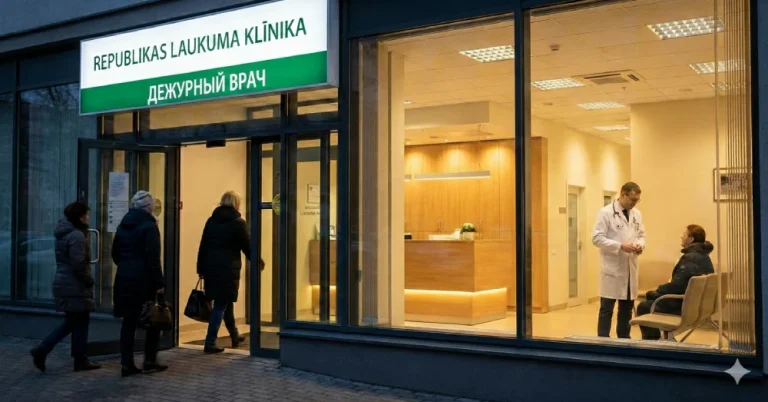
Republikas laukuma klīnika is located at Republikas laukums 3–18, on the first floor of Centra nams. The entrance is on the side facing the Ministry of Agriculture.
To arrange IV therapy or medication administration, call +371 28002363 or contact us via WhatsApp.